

People Without Language

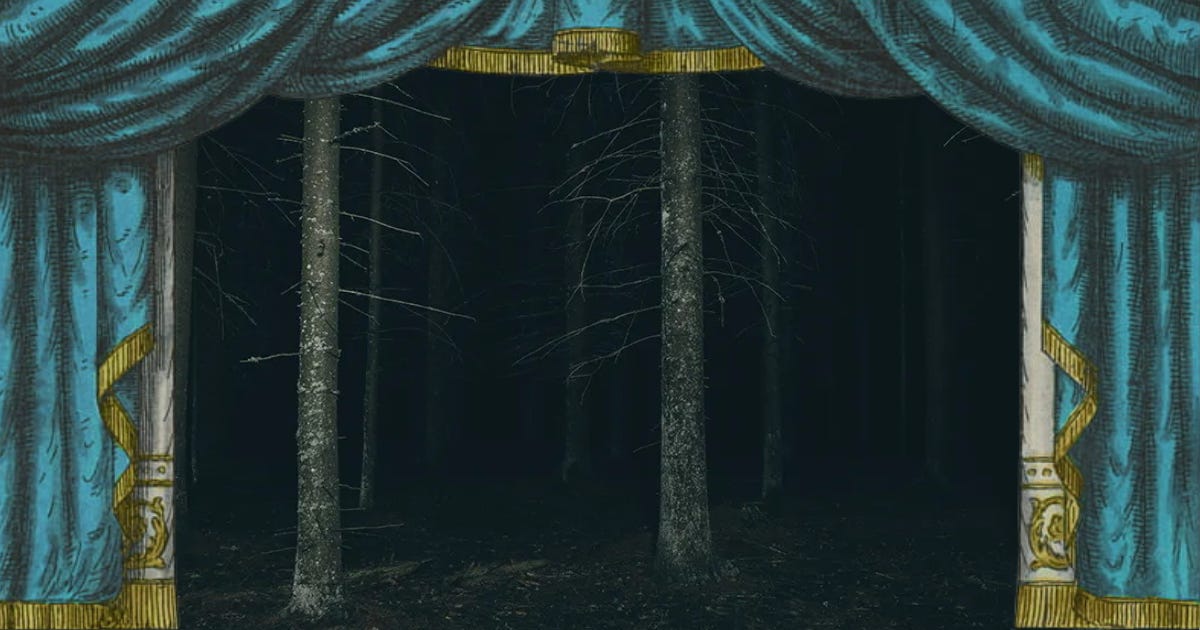
Later, when he was the talk of France, there were rumors that he walked on four legs like a beast. That wasn’t true. When he crept out of the forest one early morning in the winter of 1800, and walked into the village of Saint-Sernin, the boy appeared to be physiologically normal. Twelve or thirteen, on the edge of puberty, and entirely bipedal. From what anyone could tell, this boy had not interacted with another human being for many years. He’d lived alone, out in the forest, for god-knows-how-long. The Wild Boy of Aveyron, they called him. Or the Savage of Aveyron.
The village’s commissioner took the Wild Boy home and found that he was not housebroken. Unsure what this creature might like to eat, the commissioner laid out a sort of woodland tapas spread: “raw and cooked meat, rye and wheat bread, apples, pears, grapes, nuts, chestnuts, acorns, potatoes, parsnips, and an orange.” The Wild Boy picked these objects up one by one, sniffed, and rejected each in turn except for the potatoes, which he threw straight into the hearth. He then picked them out and ate them, scalding-hot. “He made sharp, inarticulate, yet scarcely complaining sounds,” wrote the commissioner, but he kept at it. Maybe, lacking language, the Wild Boy couldn’t articulate even to himself that the potatoes were burning him.
I lost my voice eleven days ago. Of course, in every way except one, I’m fully linguistically equipped. I can receive language from other people by listening and reading. I can write, like I am now. I can mouth and whisper and gesture. But still, I am as unmoored from language as I’ve ever been, at least since I was a young child. And like a young child, I’ve lost perspective, forgotten my manners, and become self-absorbed. It would be absurd and maybe offensive, for me to compare my situation with that of the Wild Boy. But on day eleven, I am less attentive to questions of politeness and appropriate social behavior.
Linguists mostly dismiss the Sapir-Whorf hypothesis, the infamous idea that the language you speak might set limits on the thoughts you think. But how would you study the effect of having no language at all? You would have to lock a young child away or release them into an uninhabited wilderness, depriving them artificially of all conversation. This hypothetical is known as the “Forbidden Experiment” (which is also the title of Roger Shattuck’s strange and extraordinary book-length account of the Wild Boy’s life).
It would be both illegal and psychopathic to conduct the Forbidden Experiment, but the Wild Boy came close to a perfect, naturally-occurring subject. Sure, he couldn’t speak, but it went further than that; he had no concept of language at all. “To talk to him was apparently a waste of time,” one witness observed. The sound of the human voice held no significance for him. For his part the boy sometimes laughed—though not, as far as anyone could tell, because anything funny had happened. Wrote one caretaker (one in a string of adults who would watch over the boy), “When he is sitting down, and even when he is eating, he makes a guttural sound, a low murmur; and he rocks his body from right to left or backwards and forwards, with his head and chin up, his mouth closed, and his eyes staring at nothing.” Many observers noted this during the early days: the weird lack of focus in the Wild Boy’s gaze, as though he saw nothing of the world.
Unable to express myself in speech, I am amazed by how quickly I take on the extreme yet limited emotional range of a toddler. I express dismay by pouting and stomping. When I am happy I clap with glee and cling and blow kisses. It is too much trouble to ask clarifying questions. If I don’t hear or understand someone the first time, I just let it go like a baby watching high-contrast shapes slide past on her rotating mobile. It turns out that one can get through a lot of the day with only a partial idea of what has been said. After some time, other people also lose their voices. Sure, they can vocalize, but the vocalizations don’t much matter. Or, at least, the semantic information encoded in their voices is revealed to be little more than a front for the actual point of the vocalizations, which I now see are really something more like chirping or barking or music.
What is it like—to be not just unable to speak, but actually unaware that such a thing is possible? It’s miserable, according to Helen Keller. In her autobiography, Keller does something rare, paradoxical, and completely insane: she uses language to evoke the experience of being completely language-deprived. Describing her early childhood, she says, “I felt as if invisible hands were holding me, and I made frantic efforts to free myself.” She exhausted herself with tantrums, aware via the evidence of touch that other people were using their mouths to communicate (she would put her hands on the faces of her family members and feel their lips move), but unable to figure out how they were pulling this off or why she couldn’t manage it. She describes a “silent, aimless, dayless life,” compares her younger self to a ship in a storm with no compass and no sign of land.
Keller’s description of an individual surfacing into language, “a misty consciousness as of something forgotten–a thrill of returning thought,” through which “the mystery of language was revealed to me,” through which the signed word water “awakened my soul, gave it light, hope, joy, set it free,” has always seemed to me like a kind of cipher containing the whole of literature.
Without Language, I Have Amazing New Powers of Plausible Deniability (But No Powers of Reflection). Am I petulant/aloof/dull, or is this involuntary silence of mine concealing a veritable volcano of interest and insight? You can’t know. My communicative obligations are cancelled. Unfortunately, I am prevented from enjoying this newfound liberation by the fact that I am plausibly deniable even to myself. In my normal speaking life, I learn, I am constantly working backwards to understand my own opinion. For example, today, my long-suffering husband wants to know if I am annoyed about something. This is hard to answer. Normally, I discover, I’d think something like: “Well, I’m not speaking—Usually I speak quite a lot—therefore something is up—therefore I must either feel annoyed, or else I am maybe hungry or tired.” I cannot do this, because I am giving the silent treatment by default.
My body is as much a mystery to me as my mind. Little kids have to be reminded that they have a body. My sister is always stopping my niece to ask her: How Does Your Body Feel? Is Your Tummy Full Or Hungry? Do You Feel Cold? In my nonverbal state, I feel that I would benefit from these conscious reminders of my own sensate existence. The monologue that usually runs in the background, letting me know that it will soon be time to drink water or go to sleep, has been switched off. I can pass a day without considering food, then down eight cookies, then feel surprised when my stomach hurts. My period is very short and light. When I go to my exercise class, my muscles feel weakened, like the sensory threads between my body and the world have been cut.
How does your body feel? Is your tummy full or hungry? The Wild Boy did not pause to consider these questions, and if someone had gone to the trouble of posing them, he wouldn’t have understood what they were asking anyway: not linguistically, and, from all available evidence, not conceptually either. He was curiously unresponsive to sensory existence. “Cold weather and hot potatoes turn up again to prove that temperature barely affected him. Even filling his nostrils with tobacco didn’t make him sneeze…the boy had never been seen to cry. Except when they were directly connected with eating, he seemed not to hear sounds —at least to pay no attention to them,” summarizes Shattuck. The boy’s carers considered it a triumph whenever his body proved permeable: the first time he caught a cold, the first time he sneezed, the first time he cried.
Did the Wild Boy know he was a boy? To the disappointment of his caretakers, the Wild Boy seemed to have no interest at all in social interaction, or indeed in anything that would distinguish him from an animal. When given clothes, he ripped them off. “He has no discernment, no real mind, no memory,” one of them lamented. The Wild Boy seemed incapable of foresight or reflection or interest in anything, except in certain matters of sustenance—he was observed, on the rare occasion that he was given more food than he desired, burying the excess in the ground for safekeeping.
When presented with a mirror, the Wild Boy seemed not to recognize himself. He showed no interest in his own reflection. In a way this was predictable. After all, he was uninterested in other people except to the extent that they could provide food, and he believed his reflection to be another person. He cared about the mirror only because it showed the reflection of a potato. After a few frustrated attempts to reach into the reflection and take hold of said potato, the Wild Boy understood, and turned around, and grasped the real thing.
Without Language, I’m Suddenly Vain. My reflection is a source of amazement to me. I spent minutes at a time looking at my face in the bathroom mirror, examining every plane of my cheeks, admiring the curl of my hair, in a sudden fit of narcissism. In all likelihood, I don’t look as great as I think. When visitors flocked to see the Wild Boy, lots of them were disgusted by the sight: a creature who seemed to regress every time he took a step toward becoming civilized, soiling himself and snarling and darting his inhuman eyes all over the place, producing incoherent noises.
The Wild Boy of Aveyron wasn’t deaf. But when he was first found, some people assumed that he was. He did, in fact, act like a deaf person, on two counts. Firstly, in failing to respond to sound, he behaved like someone who could not hear. But, secondly: actual deaf people at this time often behaved in wild and uncivilized ways, and lived, like the Boy, on civilization’s fringes. That is because deaf children were scattered among the hearing, with their families or else in catch-all asylums for the poor and criminal and disabled. Isolated from one another, they could not communicate, or else relied on lip-reading and home signs—gestures, but not a grammatically or lexically complete sign language. Many were assumed to be mental incompetents, without language not because they couldn’t hear it but because of some deeper intellectual or social deficiency.
While there wasn’t anything wrong with the Wild Boy’s ears, there’s a difference between simply picking up sound and hearing. The Wild Boy didn’t know how to interpret the sounds around him. He could not distinguish one vowel or one consonant from another, and he did not know which nuances of the human voice were important, although in time he must have developed a sense for tone because he would weep when scolded.
We think of language as a three-step causal process: a sound is made, your ears hear that raw aural data, your mind makes sense of its meaning. But that is not the case at all. What we hear is informed by our interpretation. The meaning-making happens upfront. If you play an experimental subject a video of a mouth making a sound (like “B”) but dub in audio of a different sound (like “G”), they don’t hear the “G”—they’ll sometimes hear the “B,” or they’ll sub in a third, alternative sound, like “D.” Or else think of the spaces between words. We don’t actually pause between words when we talk. Rather, our listeners “hear” the space because they already know there’s supposed to be a break between the words. When you hear someone speaking in a foreign language, their utterance sounds like an unrelenting rush of pure noise, because you don’t know where the pauses are “supposed” to be. Whereas your own language sounds like an orderly succession of discrete syllables and words.
Being without a voice is different from going to a foreign country where you don’t speak the language, although that, too, can have an infantilizing magic. When I travel I am always striving to grow up, linguistically speaking. I look up “How to say toilet in Turkish,” I hover in front of signage trying to parse out the patterns, I insist obnoxiously on trying to make conversation with a waiter, I strain to overhear a familiar phrase on the train. But now I don’t even strive. The worst thing you can do, apparently, is whisper, so in fact I have to strive not to speak, even to the extent that I can produce sounds. I am silent and committed to my silence, wide-eyed in my infantilized state. I feel I’m wrapped in something gauzy, unable to perceive what is happening around me or to form intelligent thoughts about it, much less to intervene.
It made sense to take the boy to the Abbé Sicard at the Institute for Deaf-Mutes. The Abbé was a pioneer in the new field of deaf education, an advocate for not just the deaf children of France but for the very concept of Sign Language and Sign Education. At the school, children who might have otherwise been without a means of self-expression could communicate animatedly and fluently, in signs. The French public was amazed to find that their deaf-mutes, thought to be both speechless and witless, were in fact capable of real cleverness. The quotations of the newly-fluent deaf in some cases gained a kind of nineteenth-century virality. “The outcasts became soothsayers and oracles,” writes Shattuck. If the Wild Boy was going to learn how to talk, even if he wasn’t technically deaf, then surely Sicard’s miraculous methods were the ticket.
It is hard to be speechless in America’s most extroverted city. A guy on the sidewalk said hello to me last night, then got visibly insulted when I didn’t answer. I’m doing a lot of waving and big huge smiles and winking and throwing-back-my-head to silently laugh, just in order to get the point across that I’m not an asshole. The problem is that the nodding, the shaking, the mouthing: it eventually gives me a formidable headache. Which means it’s probably better, in fact, not to bother in the first place, since that that actually does make me seem angry, to act all animated and then to drop the gestures and go cold. I am seized, in group conversations, by a constant sense of failure. Fucking say something, I keep thinking. It’s so weird that you haven’t said anything recently. Oh, look, a lull in the conversation: are you going to do something about it, or just let everything fall apart?
Alas, Sicard found the Wild Boy to be a hopeless case. Maybe his innate capacity for speech had atrophied while he ran feral around the forests of France. Now he was past what we’d call the “critical period” for language acquisition, too old to ever make up for lost time. The Abbé Sicard let him stay on the school grounds, but he did so as a half-human creature wandering out in the heat and the cold alone while the other children played and chattered in signs: newborn social butterflies, born at just the right place and time.
After the Institute threw up its hands, the boy was taken in by a Dr. Itard, his most faithful caretaker, his most determined teacher. Itard became something like a father, coaxing the boy into his humanity the way a real father might do the same to a much younger baby. A housekeeper named Mme. Guérin, meanwhile, became like a mother. Itard and Guérin gave the boy long daily baths and massages, which he came to love. They kept him fed, took him on visits to other households, taught him how to set the table. His eyes stopped darting wildly about, and he learned to wear clothes without tearing them off. He even started to get dressed on his own.
Without Language, I Am Extra-Female. My husband keeps apologizing. “She’s lost her voice,” he tells our neighbor, the woman at the bakery, my doctor. “I’m not just, like, talking over her.” Of course, when our conversations are merely happening in earshot of other people, rather than actually with them, we can’t explain the circumstances to them. Today, we sat outside and talked about what to cook for our Passover Seder. Well, my husband talked. I sort of mouthed, and pointed to recipes on my phone. All these people are going to think that Jewish men don’t let their wives speak, I thought, unreasonably. Meanwhile, older women keep saying things like “I bet my husband wishes that would happen to me,” and “Wow, this must be a nice break for Jonah.” I guess I don’t blame them for it—God knows it’s hard to converse when one of your conversational partners can’t speak—and yet I really am insulted that people keep saying this sort of thing. For one thing, everyone knows my husband is the one with the loud, brash personality!
I don’t usually write this much about my marriage, or about my day-to-day life, but my sense of the world feels shrunken, like I’ve been folded and enclosed into the cavity between my ears and behind my eyes.
Under Itard’s tutelage, the Wild Boy learned to love the vowel “O.” Before even that, he began attending to the sound of the human voice. Then he began to look around when someone uttered an “O.” He expanded his “sound inventory,” the number of vowels and consonants at his disposal, like a baby picking up first M and then B and then D (though, curiously, he attached himself early on to L, generally considered a tough one). He learned to imitate a few words and expressions, like “lait”—milk—although, Dr. Itard wrote ruefully, this was only an “expression of pleasure, without specific meaning,” an interjection to accompany the drinking of milk.
The boy had in many ways become “civilized,” sweet, agreeable, able to accomplish all manner of tasks requiring restraint and coordination. But he had not apprehended what in linguistics is called “arbitrariness.” I saw a huge roach the other day. Since I could not speak, whimpered in fear. This whimpering was non-arbitrary. But when my husband called out “what’s wrong?” that was arbitrary, and it was therefore language. If we were speakers of Mixe or Norwegian, he would have used a different set of arbitrary sounds to express the same question. As Wittgenstein puts it: “Can I say ‘bububu’ and mean ‘If it doesn’t rain I shall go for a Walk’?1 —It is only in a language that I can mean something by some-thing.”
Itard approached the Boy’s linguistic education through formal games. The boy was quite good at the games themselves, which involved hiding an object under a cup, or, later, matching up cutout shapes and colors in order to get a little closer to the underlying idea of arbitrary correspondence between sign and signified.
One day Itard laid out a series of objects. He then placed, beside each one, a notecard with the name of the object written on it. The word “book” next to a book, and so forth. The Wild Boy understood that each notecard represented the corresponding item. He wasn’t reading the way you’re reading this, of course, just recognizing the visual form of the word. But still. When Itard showed him a notecard, he would run and fetch the corresponding item, and vice versa. This was the beginning of his short-lived linguistic flowering. Itard would string together little charade-like commands out of a couple of notecards, and the Boy would understand his meaning, and act out his commands. With this, his whole attitude changed. It was, per Shattuck, “as if the basic process of learning to use words accurately had liberated his whole mind to deal with the world around him,” turning him into a human being with agency, able to act creatively, to use tools in innovative ways.
Wittgenstein asks us to imagine a shopkeeper. Say you go to this shopkeeper’s counter, and hand over a note asking for five red apples. First up, the shopkeeper counts to himself: one two three four five. Then he pulls out a bunch of labeled color samples and finds the one that says red. Finally, he looks up a picture of an “apple,” and remembers that this is the label we give to a specific sort of fruit. So now his task is to get up and find one-two-three-four-five of the object called “apples” in the color corresponding to “red.”
This is obviously not how language works in the real world, Wittgenstein says. Definitions are not “ostensive” ; they are not formed by some authority pointing to a given object and announcing that it is to be named such-and-such forevermore.
Instead, language is a game, or a series of games. And one learns the rules of a game by trial and error, by playing and watching people play. Consider the word “game” in and of itself, actually. What is a game? What unites a board game with a card game, or either of those with a ballgame? Is the common factor competitiveness? But what about a child’s game of house, or, (Wittgenstein’s example) a kid throwing a ball up and catching it? Is it playfulness, “amusement,” low stakes? But football is a game, and NFL players make millions and dedicate their lives to the sport and get hideous brain injuries in pursuit of winning. What about ‘playing games’ in the interpersonal sense, as in “I don’t play games”? What about war games, played by militaries?
We can only decide what is and isn’t a game through many repeated uses in many different contexts. You make and understand language by living inside it. Some things are more game-ish than others, and some not gameish at all, and others live on the border between game and not-game. If you call out “slab!” at random, Wittgenstein writes, nobody will know what it is you mean. But if you are a builder making a wall, and you have a pile of slabs and another pile of nails, then your colleague will know that you mean “bring me a slab.” That is because you are playing the same language-game.
We learn how to play most of our language-games as babies. But the Wild Boy was learning about language as an adult, through literal games and puzzles.
Don’t ask a linguist how humans came to speak in the first place. They don’t know the answer, and besides any evidence is lost in a hopelessly distant past, and so the whole question is irritating and pointless. But the city of Managua had the privilege of witnessing something like the beginning of language itself. In the seventies, Nicaragua’s deaf children found themselves in much the same predicament as their forerunners in France two centuries prior. They had no shared language, and lived dispersed among hearing families. At first, the founding of a new school for the deaf didn’t lead to much change. The school aimed for lip-reading and oral speech over sign language. This approach wasn’t working.
In the end, what happened inside the classroom mattered less than what happened out at recess and on the school bus. In those settings, the children were loose and unsupervised and allowed to make themselves clear in the way most convenient to them. And so the children, who had once languished inside the rooms of their own minds, spontaneously and out of necessity developed a rich vocabulary of signs. They did so without the influence of another language, and without the intervention of adults. The first generation laid the groundwork. The next generation, younger students at the school, turned the growing lexicon into a fully-fledged language. Its grammar filled out with things like subject-verb agreement and temporal specificity, a puppet turning into a real boy. People can’t help themselves from making language, even up against truly extraordinary barriers.
The Wild Boy never learned to talk. After all the excitement died down lived out his days in Paris, in peaceful obscurity, presumably backsliding into the linguistic night. Today, a researcher in Itard’s position would probably aim to teach the kid sign language. But Itard wanted orality or nothing, and he may have paid dearly for that particular preference. There were triumphs along the way, thought. At the peak of his learning, the Wild Boy might have gotten the most important thing: that a spoken/written/gestured sign can indicate some abstract signified, which in turn corresponds to a real-world referent. Meanwhile the human voice had become something more than pure noise, something worth paying attention to.
In some ways, this half-understanding must have been more painful than his original, total linguistic alienation. Like young Helen Keller, the Wild Boy was at times overwhelmed by frustration at the situation (being just beyond the reach of language, understanding that others had faculties he lacked, could do things incomprehensible to him) “I have seen his tears begin to fall on those incomprehensible letters, provoked by no word of reproach from me,” wrote Itard.
In spoken conversation you are on a tight leash. Every time your interlocutor speaks, a timer begins running, and you must track the timer, and decide exactly when you are going to take your turn. If you miscalculate you will either be deemed an interrupter or dismissed as stilted. Once your turn begins, another timer starts up, and then you have to quickly, quickly, say something. You must be aware of what linguistic philosopher Paul Grice called the four conversational maxims, i.e. Be Brief, Be Clear, Be Truthful, and Be As Informative As Needed (But Not Much More). And as you speak you also have to think about where to orient your body, and how to modulate the tone of your voice, and possibly what kind of accent and pronunciation are most situationally-appropriate, and how loudly you are going to speak. And you are observing your interlocutor to get a sense of whether you’re doing a good job: do they seem bored? Do they seem overwhelmed, confused? Are they themselves looking anxiously around at the surrounding strangers? It is a lot of work to be appropriate and polite, a million subconscious calculations. It is amazing that anybody, under these circumstances, can also manage to be funny, clever, interesting, original, etc.
Writing is a power fantasy come true. It’s true, you lose certain tools available to the speaker. You cannot lean close or yell. But in shedding these additional factors, dropping the timed-test pressure, exorcising the interlocutor to the status of a mere idea, we get to become perfectionists. We can try to say something really worthwhile, and go at it as many times as we wish until we’re utterly satisfied. We can experiment with what we say and how we say it, be strange and daring, rather than just spit out whatever occurs to us within the appropriate temporal juncture. It’s almost supernatural.
Now, however, I find that the ability to speak and the ability to write are not as distinct as I’d thought. Nor are they two alternative techniques available for the expression of existing thoughts: it’s not as though I can just take all the ideas unexpressed in conversation and re-route them into writing. I’m amazed at how incredibly stupid I feel without the cross-pollination of writing and speech. Every sentence I’m writing now feels a bit…translated, as though I’m thinking in my first language and then laboriously, word-by-word, clause-by-clause, remaking those thoughts in a language in which I am competent but influent.
Rural folks were generally amazed by their first sight of Paris, but the Wild Boy cared only about the bag of travel snacks on the seat beside him. On his way to the Institute for Deaf-Mutes, the boy barely bothered glancing out the carriage windows. He was indifferent to travel and unaware of, or at least unresponsive to, changes in location, with one exception: the Wild Boy continued to take great joy in the wild and the natural. He would become agitated if denied his daily walks, and he loved to look out at the countryside or to scramble up a tree trunk. He remained remarkably good at climbing trees. Yet as the Wild Boy spent more time among his human caretakers, his longing for the wild (if that indeed was what he felt—it’s all speculation, maybe even anthropomorphizing in a way) was tempered by certain earthly attachments. He once ran away and was missing for two full weeks. When he was at last found and identified and reunited with the housekeeper Mme. Guérin, he “expressed his joy in shrill cries, convulsive movements of his hands, and a radiant expression on his face.” Itard, who got a similarly rapturous reception, was skeptical: did the boy truly love his caretakers, as a child loves his parents, or did he merely associate them with the meeting of his needs?
For my part, I have cabin fever. I am also overcome with regret, and become convinced that I should never have moved back from London to the U.S. London is “globally connected,” I moan to my husband, using up my ration of whispers. I insist that we go and see a French movie. I know, of course, that I feel disconnected from the world for reasons that have nothing at all to do with my geographic location. But my brain won’t accept that I’m the problem. If only I were elsewhere, I would be a real grownup, in-control, judicious and subtle with my speech.
I read lots of accounts of feral children, and I find that the oldest ones are the most fascinating and disturbing. Children raised outside the human world have a way of collapsing time around them, an effect strengthened by historical distance. The Wild Boy of Aveyron made human contact in 1800, whereas another child known as Genie, (locked away all her life in a dark room, unable to speak) was found in 1970. But from where I stand they are equally familiar and equally foreign. The Wild Boy boy and I have the same relationship to French society c. 1800. If I hopped in a coach to post-Revolutionary Paris I would be a foreigner there, like the Wild Boy, and would be lost amid everything from the food to the language to the microbes to the calendar—since in this period they were still using their Republican ten-day weeks and new months, Thermidor and Floréal and Frimaire. To the people who found him, it mattered that this was France in 1800, in the dip between the Revolution and the Napoleonic Wars, at the advent of modern deaf education.2 But to the Wild Boy this was all incidental. I imagine him running parallel behind the tapestry of events, protruding, deforming the weave as he moves, but never woven into the picture.
I Feel An Urge to Help in the Garden I am not a person who likes to “get my hands dirty.” I am someone who “lives in my head” (see how I am reaching for secondhand language, gathering up phrases others have dropped?). But today, voiceless, I want very badly to get soil under my nails and to be elbow-deep in dirt. I turn down a shovel and gloves. Everything in the physical world shimmers with meaning and intrigue, the way that it did when I was little, or the way it does when you take a perfectly calibrated dose of mushrooms.
The Wild Boy of Aveyron had a great passion, an activity in which he assumed the tranquil, devotional manner of an animal at rest, or of an aesthete stopped in his tracks before a great painting. He never developed a taste for wine, but, wrote Itard, the Wild Boy loved drinking water, sipping from his glass like “a gourmet getting ready to taste an exquisite liqueur.” And as he sipped, Izard said, “Our refined drinker goes to the window and stands with his eyes turned toward the open country. It is as if at such a moment of enjoyment this child of nature wanted to reunite the only two possessions that have survived his loss of liberty—a drink of clear water and the sight of sun and countryside.”
There is an embarrassment of text in the world, and the most dedicated reader couldn’t hope to make a dent. Plus, while I sit here and write about people-without-language, we suddenly have to reckon with its newborn corollary: language-without- people. LLMs are belching out fumes of prose, as if we’re somehow lacking for text. Quite the contrary! When a writer I love publishes something new, my anticipation is shot through with a little guilty dread. Oh great, I think: another thing to read. Which means some other piece of writing, maybe a worthier piece of writing, will have to go unread. Because one day I will die, and I will die before I finish all this reading I’m supposed to do. You, reading this: if you’ve made it this far, I assume you like my writing or at least find it compelling, and yet I wonder if you too find your eyes flicking down to the bottom of the piece, wondering when you get to wrap this up. As Michel Chaouli wrote in a lovely recent essay on not finishing books: “as soon as I begin reading, there is a disturbance. It’s a voice in my head, and it’s asking: How long is this going to take? When will it end?”
And so, in order to write, you must sustain a completely delusional belief: to wit, that you have something really worth saying, and (even more ridiculously) that some reader would truly benefit from taking time out of their mortal life to read your words over some other set of words. Losing your voice corrodes this carefully-conserved delusion. Because here you are, speechless, unable to interject when you have a suggestion or an idea, or even when someone is right there saying something flatly incorrect. And it’s fine. The world moves on. Mistakes are corrected in due time. A harsh truth: you might, in fact, not have anything urgent to say. At first, a kind of depression sets in.
And then after some days, that depression subsides, and language opens out around you like a wilderness. You can ask yourself: what’s the point of speaking or writing? Why bother, when it’s all so useless? But then, what is the point of a wilderness? What’s the reason for a tree? And why bother climbing this tree, when there are so many trees to climb, more than you could ever manage in your lifetime? These are stupid questions. You might as well luxuriate in the futility of it. You might as well sip your water and look out at the rippling, rustling expanse of language, scramble up its trees, and go feral.
a proposal the Wild Boy would have appreciated, since he so loved his walks
Shattuck’s book is particularly great in its account of this historical moment.
Beautiful and brilliant and also thank god you can talk again
Hope you get your voice back soon! Loved reading this. Didn’t actually mean to begin, but then couldn’t stop! :)